In the world of e-bike customization, the rivalry between high-speed motor kits and geared motor kits (low-speed motor kits) has long been a heated debate. Their opposing design philosophies and performance priorities create distinct camps. This article breaks down the pros, cons, and ideal use cases for each kit, helping you choose the best upgrade for your needs.
I. Core Differences: Design Philosophy & Working Principles
1. High-Speed Motor Kits: Speed-First, External Gearing
- How They Work
High-speed motors prioritize high RPM (typically >2000 RPM) but deliver low torque directly. They require external gearboxes or belt reducers (with a 10:1 reduction ratio) to lower the RPM to wheel-friendly levels (200–300 RPM) while doubling torque. - Typical Structure
Composed of a high-speed motor, external gearbox, and controller. Complex design, lightweight (~4 kg), but bulkier.
2. Geared Motor Kits: Torque-First, Integrated Design
- How They Work
Built-in planetary gears or worm drives directly output low RPM (200–500 RPM) and high torque, eliminating the need for external reducers. - Typical Structure
Compact and integrated, heavier (6–7 kg), but easier to install and maintain.
II. Performance Showdown: Speed, Torque & Efficiency
| Parameter | High-Speed Motor Kit | Geared Motor Kit |
|---|---|---|
| Top Speed | 15-60 km/h (exceeds 25 km/h legal limit(25km/h speed limit in many countries)) | 25–35 km/h (compliant with regulations) |
| 0–25 km/h Acceleration | 3–5 seconds (sluggish start) | 2–3 seconds (instant torque burst) |
| 30° Hill-Climbing | Drops to 15 km/h (power shortage) | Maintains 20–25 km/h (strong torque) |
| Flat Terrain Range | 80 km (40 km/h cruising, 8 Wh/km) | 70 km (25 km/h cruising, 6 Wh/km) |
| Hill-Climbing Range | Plummets to 50 km (+30% energy drain) | Stable 60 km (efficient low-speed torque) |
| Noise Level | 65–75 dB (gear friction noise) | 55–60 dB (quiet brushless design) |
Key Takeaways:
- High-Speed Kits: Excel in speed and long-range cruising but struggle on hills and under heavy loads.
- Geared Kits: Dominate low-speed scenarios with efficiency and stability but sacrifice top speed.
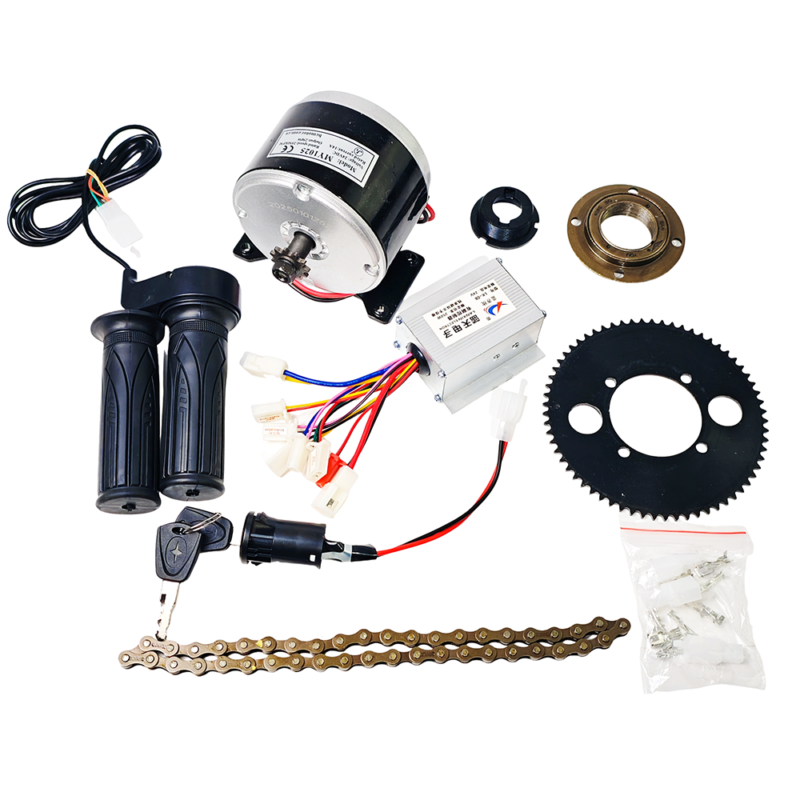
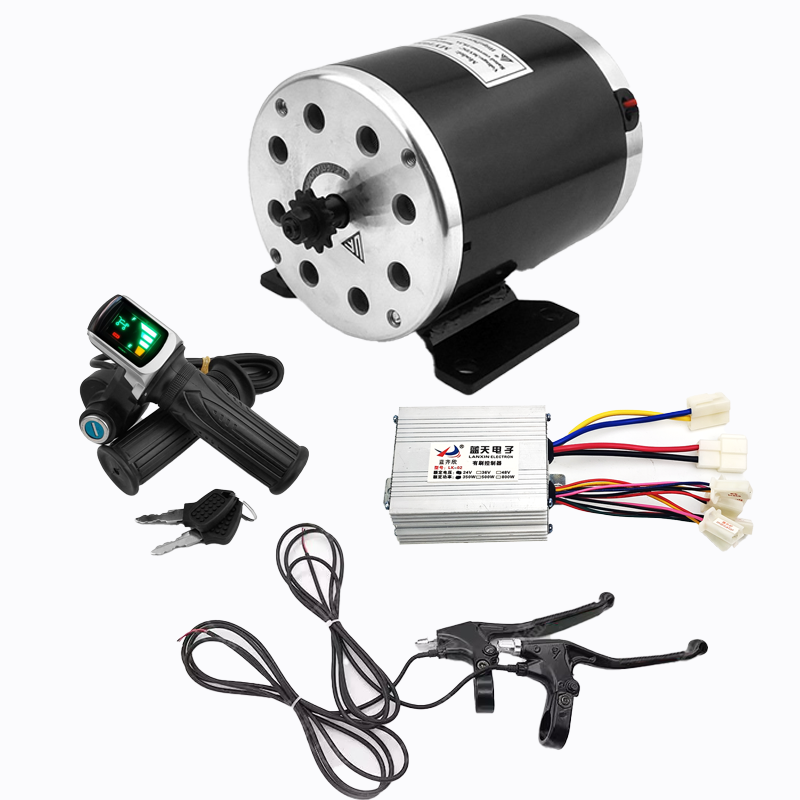

-800x800.png)
III. Cost & Maintenance: Economy vs. Durability
1. High-Speed Motor Kits: High Investment, High Maintenance
- Upgrade Cost: 800–1,500 RMB (includes gearbox and controller).
- Maintenance Pain Points: Gears require lubrication every 3,000 km; belts last ~15,000 km; 30% higher failure rate.
- Lifespan: ~30,000 km (performance declines due to gear wear).
2. Geared Motor Kits: Budget-Friendly, Low Effort
- Upgrade Cost: 500–800 RMB (integrated design).
- Maintenance Perks: Sealed brushless motors require no upkeep; lifespan exceeds 50,000 km.
- Failure Rate: 1/3 that of high-speed kits (no gear wear).
IV. Use Cases: Needs Dictate Choice
1. High-Speed Kits: Ideal Scenarios
- Flat Urban Commutes: Long daily rides (20+ km) requiring 40 km/h cruising.
- Speed Enthusiasts: Thrill-seekers chasing “50+ km/h” speeds (legal risks apply).
- Weaknesses: Struggles on hills; energy drain during frequent stops.
2. Geared Kits: Dominant Scenarios
- Hilly Terrain: Stable performance in mountainous or steep areas.
- Heavy Loads: Perfect for food delivery, two-person rides, or cargo hauling.
- Regulatory Compliance: Legal in 25 km/h speed-limited zones.
- Weaknesses: Less efficient at high speeds; unsatisfying for speed lovers.
V. Regulations & Safety: Critical Considerations
- High-Speed Kit Risks:
Exceeding 25 km/h may lead to fines (in regions with speed limits); braking distance at 50 km/h is 15 meters (40% longer than geared kits), necessitating upgraded brakes. - Geared Kit Advantages:
Compliant with laws; standard brakes suffice for safety.
VI. Final Decision Guide
Choose High-Speed Kits If You:
- Commute 30+ km daily on flat roads;
- Accept legal/safety risks for speed;
- Have budget and patience for frequent maintenance.
Choose Geared Kits If You:
- Ride in hilly or stop-and-go areas;
- Haul heavy loads (e.g., cargo or passengers);
- Prioritize affordability and hassle-free durability;
- Require 100% legal compliance.
Conclusion: No Perfection, Only Fit
The clash between high-speed and geared motor kits reflects a deeper battle: speed vs. torque, thrill vs. practicality. Customization isn’t about chasing specs but aligning with real-world needs, regulations, and budgets. While future tech may merge these strengths, today’s riders must choose wisely. Know your terrain, weigh your priorities, and let logic—not hype—drive your decision.
